
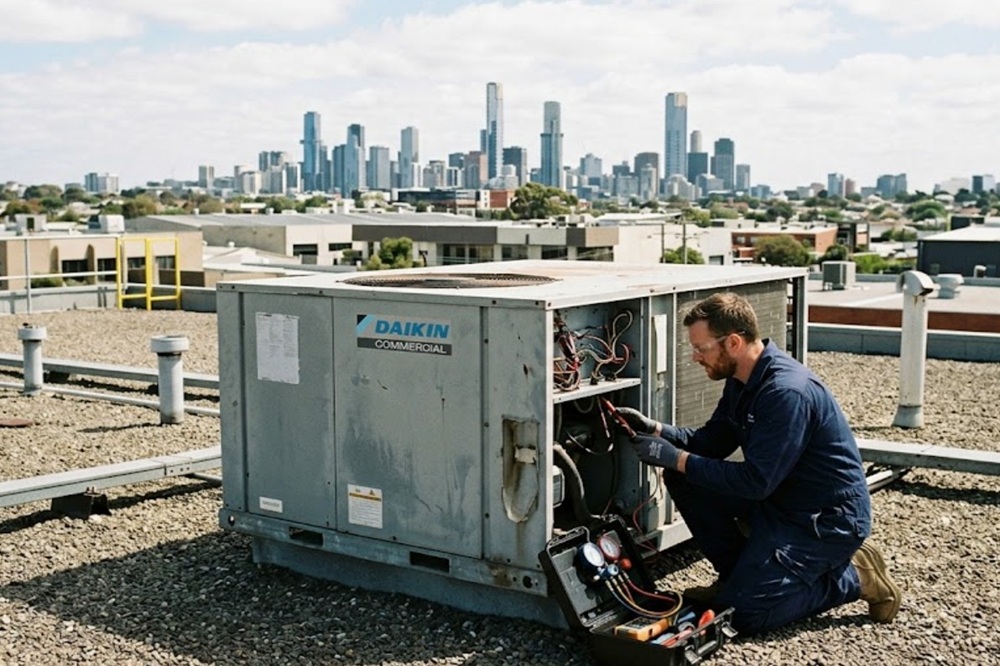
A split system in someone’s lounge room runs for maybe four hours a day through a Melbourne summer, and barely at all for the rest of the year. The same style of unit sitting on the roof of a warehouse in Bundoora can run twelve hours a day, five days a week, for most of the year.
Booking a commercial air conditioning service in Melbourne on the same twelve-month cycle as a home unit happens more often than it should.
Run Hours Change What Wears Out First
Filters clog faster under near-constant airflow. Belts and bearings on rooftop package units see more operating cycles in a single quarter than a residential compressor sees across an entire year. None of this shows up as a dramatic fault early on.
It just shows up as slightly worse performance, then a slightly higher power bill, then a breakdown that looks sudden but wasn’t.
Retail Floors Wear Differently
A café that keeps its door propped open all day puts a different kind of strain on a system than four walls and a closed door ever will. A gym with forty bodies generating heat load does too, and so does a warehouse with roller doors going up and down through a shift. None of it was accounted for in a heating and cooling schedule built around a house.
There’s a Compliance Layer Residential Servicing Skips Entirely
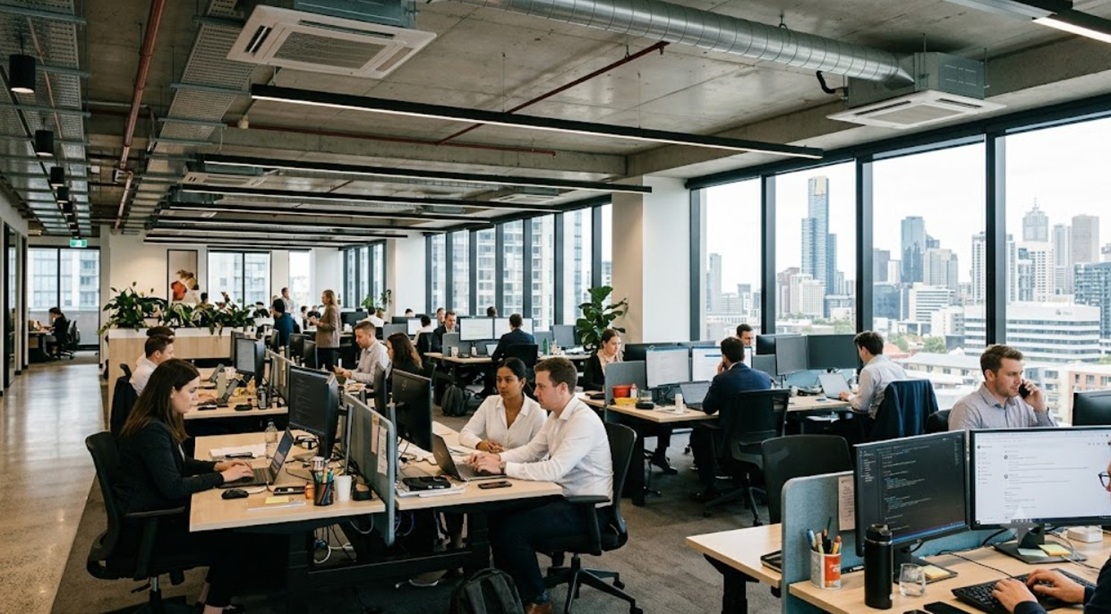
Staff spend eight hours a day in a commercial space, sometimes longer. Indoor air quality and ventilation stop being purely comfort questions once that many people are relying on the system for that long. Some tenancy agreements and insurance policies specify minimum servicing intervals directly, which is not something a homeowner ever has to think about twice.
Different Systems Need Different Schedules
A rooftop package unit, a multi-head VRV system, and a set of ducted commercial splits don’t wear the same way or fail the same way. Rosanna Heating & Cooling holds dealer authorisations across Daikin, Mitsubishi Electric, Panasonic, Rinnai and several other major brands, largely because a technician who only knows one system type ends up guessing at the rest. Guessing is fine for a home service call. It’s a worse idea on a commercial roof with four units and three different manufacturers.
Timing the Service Around Peak Load, Not Convenience
A lot of commercial servicing gets booked into whatever gap is left in someone’s calendar, rather than ahead of the season the system is about to work hardest in. A reverse cycle system heating an office through a Melbourne winter is under real load from June through August. Booking the service in October, after the season that mattered, fixes nothing that actually needed fixing back in July.
Rooftop and Multi-Unit Sites Need Planning, Not Just a Callout
A single commercial site can run three or four units across different zones, sometimes different systems entirely if the building has been extended or retrofitted over the years. Getting a technician onto a roof is one part of it. Coordinating access around trading hours is another. Servicing every unit in the same visit, without turning it into an all-day event, is the harder part still. Eight field teams operating across Melbourne exist for exactly this reason, so a multi-unit site with awkward access doesn’t turn into three separate callouts spread across three separate weeks.
What Skipping a Commercial Air Conditioning Service Actually Costs a Business
A missed service on a home unit usually means it runs a bit less efficiently until someone notices the power bill. A missed service on a commercial system tends to end in a breakdown at the worst possible time, usually right in the middle of trade.
Trading hours are what get lost, not appointment slots.
Honestly, most businesses only think seriously about their commercial air conditioning service schedule on the day the system stops. By then the choice isn’t between a service plan and no service plan. It’s between paying for an emergency callout during business hours or closing the doors early.