
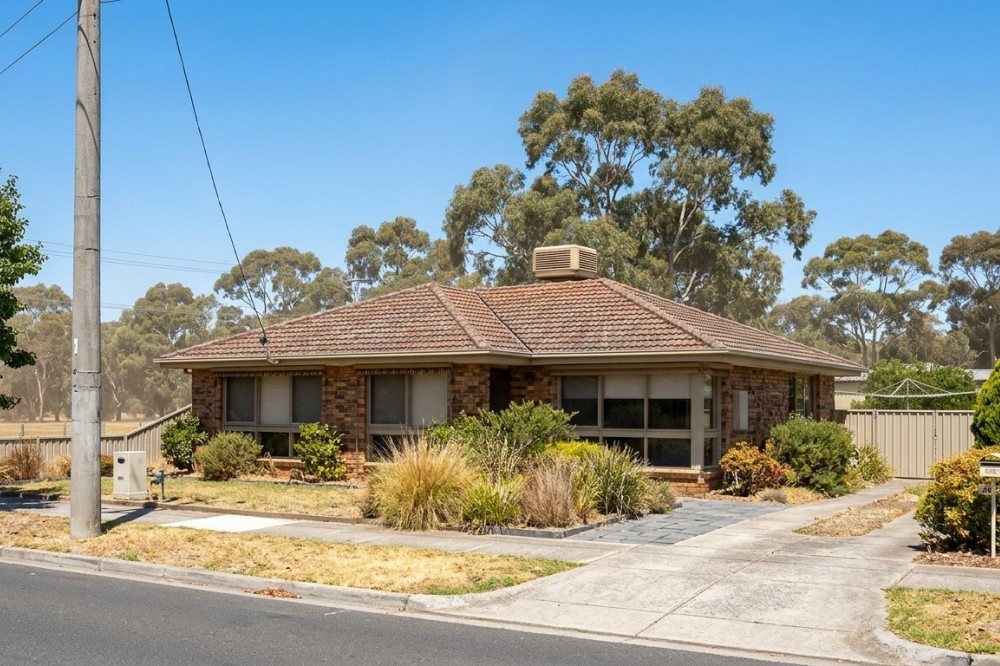
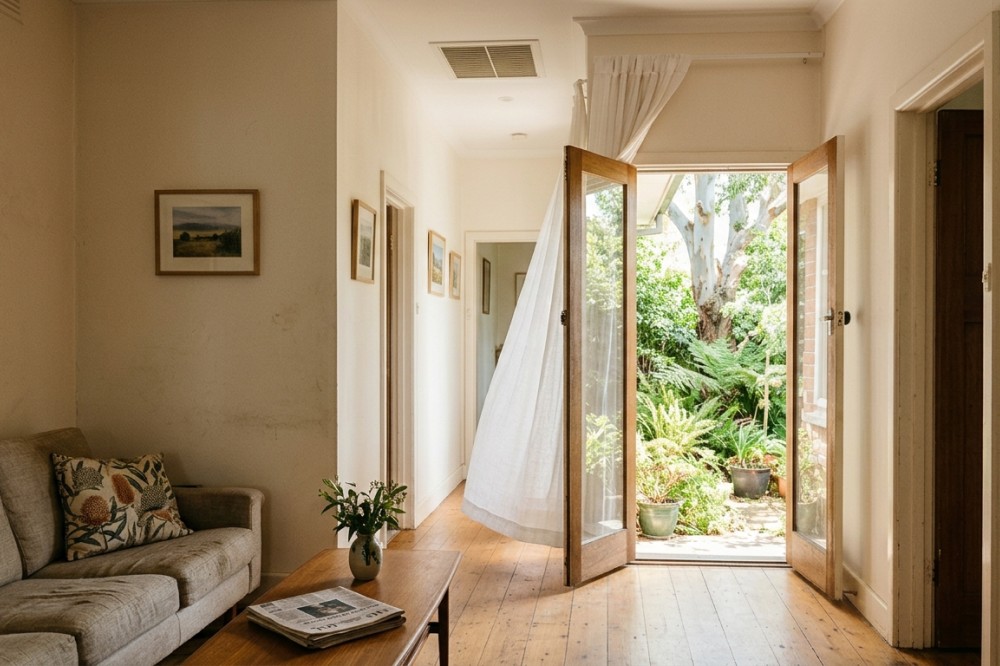
If you visit a house with evaporative cooling on a 38-degree day, the first thing you’ll probably notice is the back door. It’s open. There’s a window cracked somewhere down the hallway too, and you can feel the air moving through the whole house. If you grew up with refrigerated air, this looks completely wrong the first time you see it.
It isn’t wrong though. That open back door is just how evaporative cooling in Melbourne homes works, and it tells you a lot about living with one. You don’t lock the house up for summer like you would with refrigerated air.
The air feels different, and people either love it or don’t
How it works is pretty simple. Outside air gets pulled through wet pads in the roof unit to cool it down, and then it comes into the house through vents in the ceiling. The air coming out is always new air from outside, rather than whatever’s been going around the room since lunch. Even after it’s been running all day, the house doesn’t get that stuffy, closed-in feeling a sealed room has by 5pm.
You notice this most if you’ve got dogs, kids running in and out, or someone cooking dinner while it’s hot. Honestly, it’s why a lot of people who’ve had evaporative for years won’t switch, even when a salesperson tells them refrigerated would make the room colder.
And it probably would. Evaporative cooling doesn’t make a room cold the way refrigerated air does. What it does is take the heat out of the air and keep it moving, and on the right day that’s more than enough for most people.
Melbourne’s northerlies are where evaporative cooling earns its keep
Melbourne’s worst days usually come with a hot, dry northerly blowing in from inland. It’s really hot, but the air is dry. That mix is what took Melbourne to 46.4 degrees on Black Saturday in February 2009. Dry air picks up moisture from the pads easily, which is why a dry northerly is the kind of day evaporative cooling handles best.
Sticky days are harder. Most summers have a few afternoons where the humidity sticks around after a storm or a change, and the system just has less to work with on those days. It still moves the air, but it won’t feel as fresh. Most owners don’t let it bother them much, since there aren’t many days like that.
The habits that change once you’ve got one
If you’re used to refrigerated air, there are a few things you’ll need to unlearn:
- Leave some doors and windows partly open. The air has to go somewhere, or the house starts feeling damp.
- Turn it on early. It’s much easier to keep a house cool than to cool one down after it’s already hot at 3pm.
- Don’t ignore the fan speed. Moving air on your skin is a big part of why it feels cooler.
- Someone has to look after the roof unit once or twice a year, and that’s about it.
That last one is really the main downside.
Because the unit sits on the roof and runs on water, the pads and pump need regular care. It should be fine if you get it serviced before summer. Skip it for a few years and there’s a good chance it breaks down on the hottest day of the year, when every technician is already booked out.
The running costs are the quiet selling point
Most of the work is done by a fan and a small water pump, and there’s no compressor. That’s why evaporative systems use much less electricity than refrigerated air when you’re cooling the whole house. You see the difference most in bigger, older homes, like a classic brick veneer with a long hallway and four bedrooms coming off it. Trying to cool every one of those rooms with refrigerated air gets expensive fast.
They do use water, and some first-time owners don’t expect that. It’s just part of how the system works, not something going wrong, so it’s worth thinking about alongside what you’ll save on power.
Not every house is an evaporative house
Some homes are better off with something else. An apartment with no roof access is one, and so is a household that wants one system to do both heating and cooling. If you like your bedroom cold and closed up on a still night, evaporative probably isn’t for you either. But for a single-storey house in the northern or eastern suburbs, where summer heat is dry and the family likes having the doors open anyway, it’s hard to beat.
How well it works also depends on things like your roof pitch and where the outlets go. You could put the same unit in two houses on the same street and they’d feel completely different, just because of where the vents are and whether the air has a way out.