
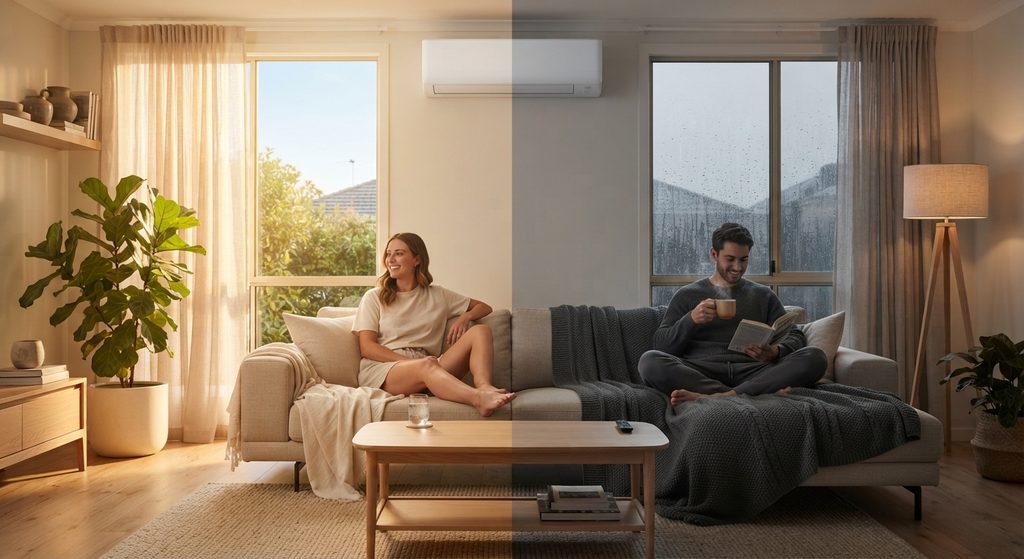
Ask three installers what a reverse cycle system costs and you’ll get three different numbers, and none of them are wrong. Reverse cycle aircon covers everything from a single split system in a bedroom through to a fully ducted setup running the whole house, and the price gap between those two jobs is bigger than most people expect walking in. The unit itself is usually the smaller line item. The size of the space, how the ductwork or piping needs to run, and what the house already has in place, that’s what actually moves the quote.
Why unit size isn’t where the real cost sits
A 2.5kW split system for a single room and a 10kW unit for an open-plan living area aren’t priced that differently on paper. The gap widens once installation gets factored in. A single split system usually means one indoor head, one outdoor unit, and a short run of piping through an external wall. Ducted systems mean ceiling access, zoning dampers, and a lot more labour before the system ever switches on. Two houses with near-identical square footage can land on very different quotes purely because one has easy roof access and the other doesn’t.
A few things tend to move a reverse cycle quote more than the unit’s kW rating:
- Ceiling and roof cavity access — straightforward access keeps ducted installation labour down; tight or split-level roof spaces add hours
- Length of pipe or duct run — a system installed close to the outdoor unit costs less to connect than one running the full length of the house
- Existing electrical capacity — some older switchboards need upgrading before a larger system can even be connected
- Number of zones — a ducted system with five independently controlled zones costs more to install and program than one running as a single zone
Running costs behave differently to installation costs
Once it’s installed, reverse cycle tends to be one of the cheaper systems to run for what it does, mostly because it’s moving heat rather than generating it. Every unit of electricity going in produces several units of heating or cooling coming out, which is the opposite of a system like a plug-in electric heater burning power one-to-one. That efficiency holds up well through most of a Melbourne winter, though it does taper off on genuinely frosty mornings, when the unit has to work harder to pull heat out of colder outside air.
Older homes carry hidden costs that new builds don’t
A house built in the last decade usually has the wall cavities, ceiling access, and insulation already sorted, so installation is mostly plug-and-play. A 1960s weatherboard rarely gets off that easy. Opening up a wall for piping, adding insulation so the system isn’t fighting a leaky roof space, sometimes both. None of it shows up on a quote for the unit itself.
It shows up fast once an installer actually walks the site, though. That gap between a phone estimate and an in-person one isn’t an installer padding the number. It’s the difference between guessing at a house and actually seeing it.
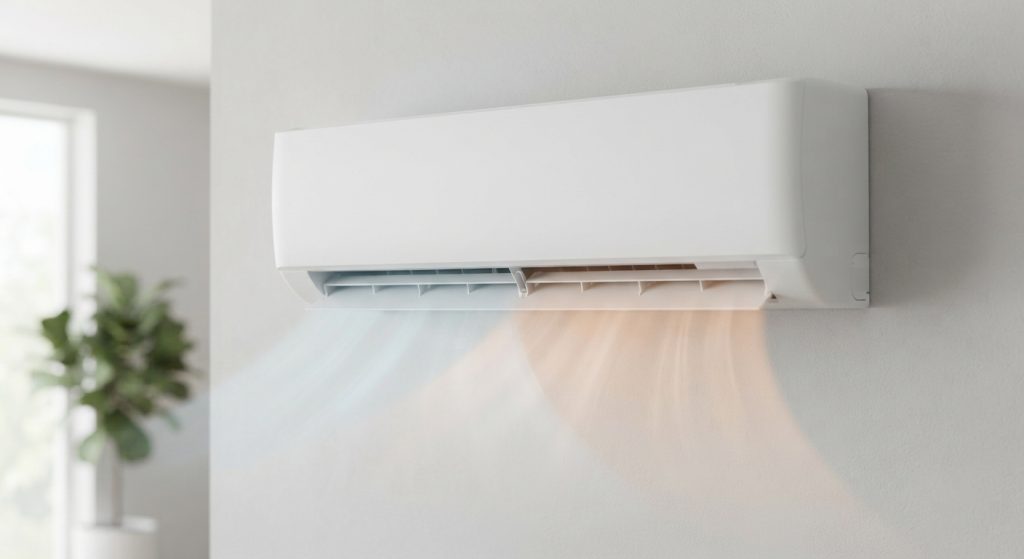
The Victorian rebate changes the maths for a lot of households
Reverse cycle systems are eligible for discounts under the VEU program in a lot of cases, and that rebate can bring the upfront cost down meaningfully, sometimes by a few hundred dollars depending on the unit and household eligibility. Here’s the trap: two identical-looking quotes can land on very different final numbers once one has the rebate applied and the other doesn’t. Compare the sticker price alone and you’re comparing the wrong thing entirely.
Duct complexity, existing insulation, and rebate eligibility do more to shape that final number than brand ever does. Which is exactly why a proper site visit beats a phone estimate every time.