
The lounge hits 22 degrees by six. Down the hall, the spare room is still sitting at 16, door closed, heater running for nobody. That’s not a fault. That’s a ducted system with no zoning, working exactly as installed.
Many Melbourne homeowners choose gas ducted heating for a reason: it heats the whole house from one unit, quietly, without the clutter of wall units in every room. But “whole house” doesn’t have to mean “one temperature for everyone.” Zoning splits the ducted heating systems installers fit into separate, independently controlled sections, so the areas you’re actually using get the heat, and the ones you’re not don’t sit there burning gas for an empty room.
What Zoning Actually Changes Day to Day
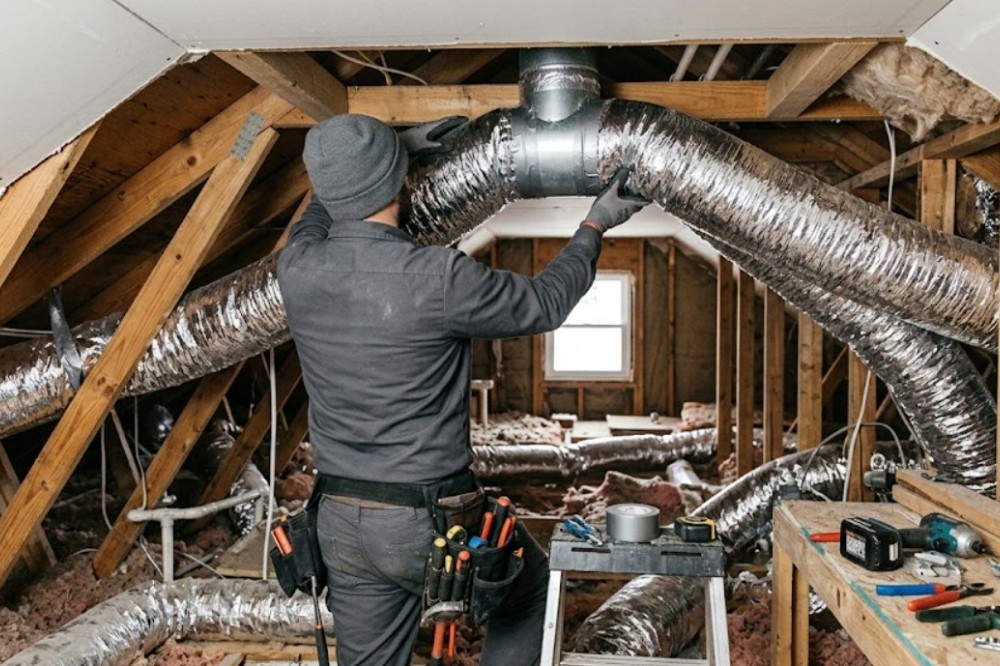
A house without zoning treats every room the same. Turn the system on, every duct opens, every room gets heated whether anyone’s in it or not. With zoning, motorised dampers in the ductwork open and close per zone, controlled from a panel or an app, so different parts of the home run at different settings at different times.
In practice that tends to break down into something like:
- Living zones on in the morning and evening, off overnight
- Bedroom zones on a lower, steady setting overnight, off during the day
- Guest rooms or studies left off entirely until someone’s actually using them
- A main zone that runs longer hours than the rest, because that’s where people actually are
Not every household splits it the same way. A family with older kids doing homework in their rooms after school wants a different zone pattern to a couple in a two-bedroom unit. That’s the point of it.
Getting the Ducted Heating Installation Right the First Time
Zoning isn’t something bolted onto an existing system as an afterthought, or it can be, but it works better when it’s planned into the ducted gas heating installation Melbourne from the start. Duct sizing, the number of zones, and where the dampers sit all affect how evenly a zoned system performs. A house zoned into six sections needs different duct runs to one zoned into three, and getting that wrong is how you end up with a “zoned” system where two rooms still won’t warm up properly.
Rinnai and Braemar systems handle multi-zone setups well, and most new ducted heating Melbourne installs can be zoned from day one without a major cost jump. Retrofitting zoning into an older ducted system is possible too, though it depends on how the original ducting was laid out.
Worth saying: not every home needs six zones. Some only need two, living areas and sleeping areas, and that’s genuinely enough. More zones means more control, but also more to configure and occasionally troubleshoot.
Where the Savings Actually Show Up
The efficiency argument for zoning isn’t abstract. Heating three occupied zones instead of eight rooms uses less gas, full stop. Over a Melbourne winter that difference compounds, particularly in larger homes where a lot of ducting has historically run to rooms that sit empty most of the day.
It also changes how the system feels to live with. A single-zone ducted heating installation either has the whole house at one setting or it’s off. Zoning gives people something closer to what they’d get from individual heaters in each room, minus having a heater in each room.
If your ducted system was installed without zoning, or you’re planning a new one and haven’t discussed it yet, it’s worth raising before installation rather than after. Get in touch with Rosanna Heating & Cooling and we’ll talk through what a zoning setup would look like for your home.