
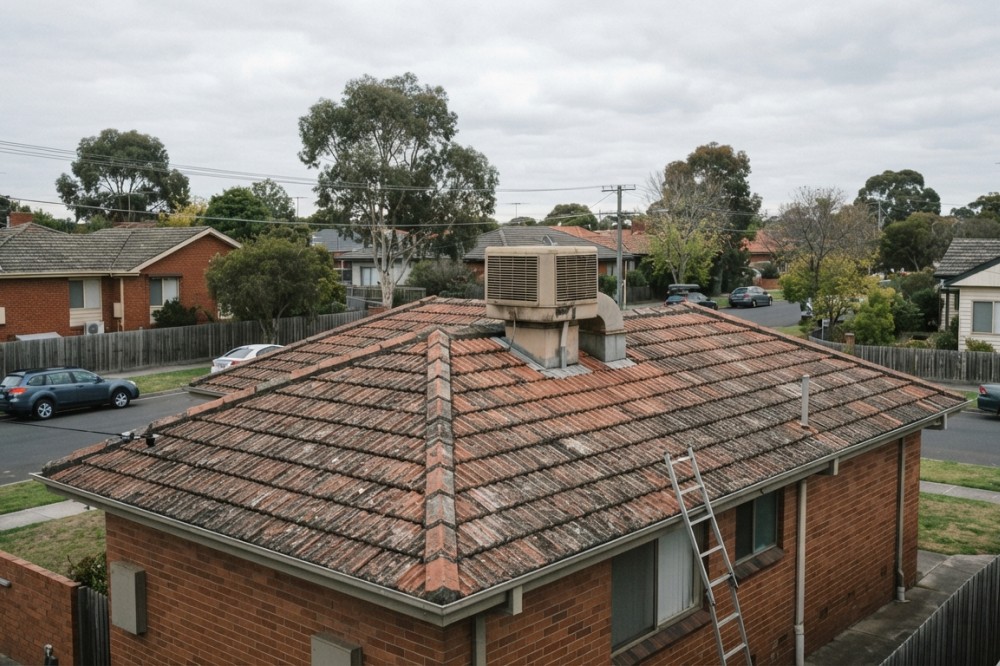
By the time most Melbourne homes flick their evaporative cooler on for the first proper hot day, the water sitting in that tank has usually been there since the last one. Nobody drained it in April. Nobody checked the pads before the cold set in. It just got switched off and left, and it’ll sit there until the next heatwave forces the question.
That gap between last use and next use is where most evaporative cooling problems actually start. Not during summer. During the six months nobody’s looking at it.
What Sitting Idle All Winter Actually Does
Water left standing in a reservoir doesn’t stay clean. It picks up dust, breeds algae, and by spring it smells like it. The pump sits in that water the whole time too, and pumps that sit idle for months are far more likely to seize or corrode than ones that get drained and dried out properly. Melbourne’s water isn’t especially hard, but scale still builds on anything left wet for half a year.
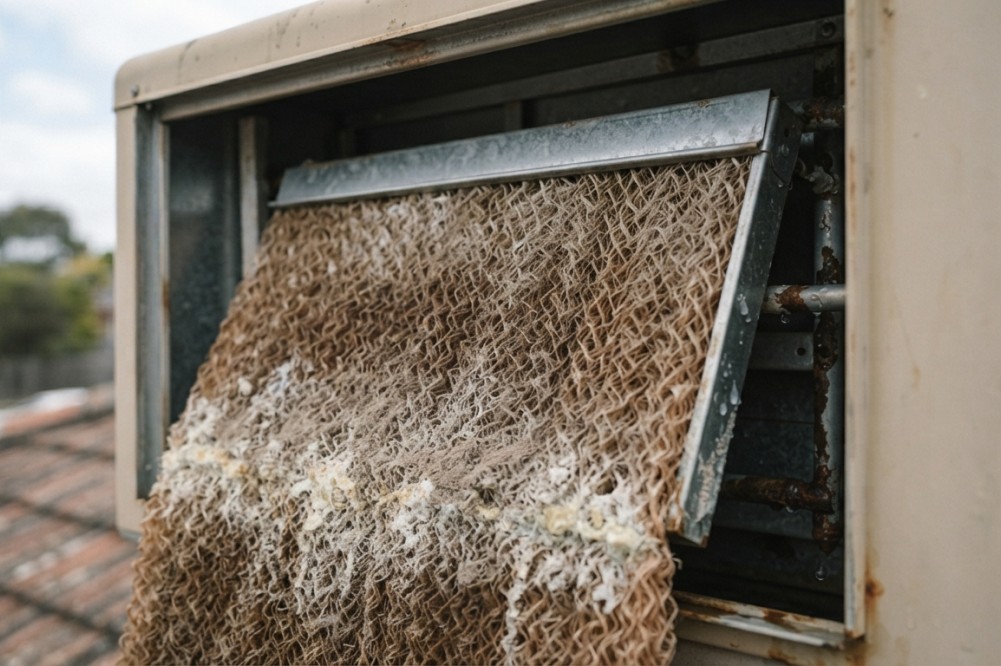
Pads are the other casualty. They dry out, sometimes unevenly, and any dust that settled into them over winter turns into a musty smell the first time the unit runs. A pad that looked fine in April can be crumbling by September. Nobody checks in April, so nobody knows until the unit’s running and the smell hits.
Shutting It Down Properly at the End of Summer
A proper shutdown isn’t complicated, but it does need to happen while the unit’s still accessible and the weather’s still decent enough to be up on the roof.
- Drain the reservoir and tank fully, rather than just switching the unit off with water still in it
- Clean out the pump and float valve before everything sits for months
- Check the pads while you’re up there. If they’re on their way out, replace them now rather than in the first heatwave of next season
- Turn off the water supply line at the isolation valve
- Cover the unit if it’s exposed to the weather over winter
That last point catches a lot of Melbourne homeowners out. A unit left uncovered through a wet winter takes on more grime than one that’s sealed properly, and cleaning that off later takes longer than covering it would have.
Waking It Up Before the First Hot Week, Not During It
The mistake most homeowners make isn’t skipping the checks. It’s doing them too late. September is the window. Not the last week before a 38-degree day, when every technician providing evaporative cooling in Melbourne is already booked solid and the earliest slot is a week away.
A proper start-of-season check covers the water supply and float valve, belt tension, and a full pad inspection before the first run of the season, not during it. Run the unit for a few minutes before you actually need it. If something’s wrong, you want to find out on a mild Tuesday, not the first 35-degree Saturday of the year.
Roof access is worth mentioning too, because most evaporative units sit up there and most homeowners aren’t set up to get to them safely, let alone diagnose a pump issue once they’re up. That’s less a maintenance point and more a straightforward safety one.
Rosanna Heating and Cooling has been working on Melbourne roofs since 1944, which is long enough to know exactly what a unit left idle for six months tends to need. If your evaporative cooler hasn’t had an off-season check in a while, get it looked at before the season turns, not after the first hot week floods every booking calendar in the city.